
“Mason’s music is astonishingly inventive and powerful, generating a searing, hypnotic intensity.”
The Strad
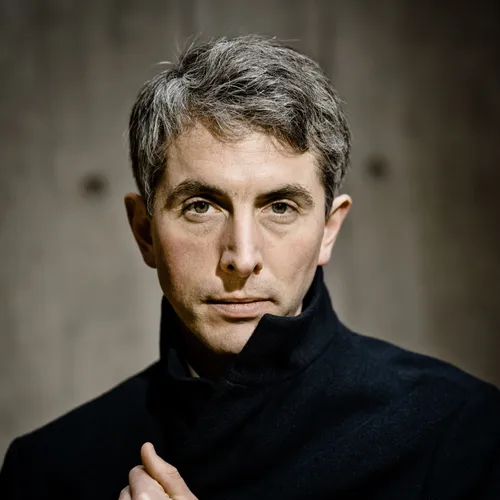
Christian MASON (1984, United Kingdom) is one of the leading voices of his generation, known for music of striking imagination, refined sonic craftsmanship and compelling expressive force. His work is characterised by interwoven textures and subtle metamorphoses of sound that often create dreamlike, immersive atmospheres, demanding attentive listening while communicating with direct emotional clarity.
Born in London in 1984, Mason attracted international attention in his early twenties with his first orchestral works. He was awarded the Ernst von Siemens Composer Prize in 2015, with critics praising the “magic” and delicacy of his musical language, and in 2025 received the Grawemeyer Award for Music Composition for Invisible Threads. His music is regularly performed by leading orchestras, ensembles and soloists worldwide. Recent highlights include the orchestral work Sympathetic Resonance, premiered by the Frankfurt Radio Symphony Orchestra; The Oddity Effect for Ensemble Modern and SWR Vokalensemble; and major projects with his Octandre Ensemble, which he co-founded in 2011. His work has been featured at the Elbphilharmonie Hamburg, Alte Oper Frankfurt, Wittener Tage für neue Kammermusik, ECLAT Festival Stuttgart, ACHT BRÜCKEN Cologne, and the Pierre Boulez Saal Berlin. His double bass concerto ast just been premiered in 2025 by the Orchestre National d’Auvergne, with further major recordings forthcoming.
Mason has collaborated with ensembles including the Vienna Philharmonic, Philharmonia Orchestra, London Sinfonietta, Ensemble intercontemporain and Arditti Quartet, and has written extensively for voices, chamber ensemble, orchestra and installation formats. His music is published by Breitkopf & Härtel and recorded on labels including LSO Live, Col Legno and Winter & Winter.
Christian Mason studied at the University of York and King’s College London, completing a PhD with George Benjamin, and worked as Composition Assistant to Sir Harrison Birtwistle. He is a founding Artistic Director of the Octandre Ensemble, a mentor to young composers internationally, and an active performer on the theremin.
2025/26 season
This biography is to be reproduced without any changes, omissions, or additions, unless expressly authorised by the artist management.
Text by Paul Griffiths
Theorising the significance of identity – similarity and difference – within shoals of fish, the oddity effect is a scientific hypothesis which posits that individual members of a shoal who look different are more likely to fall prey to predators.
Viewed like this, you wouldn’t want to be the one who stands out. Of course, this negative aspect is just one side of oddity, beyond the world of fish the relationships between groups and individuals are never so simple!
When I first suggested the idea to Paul I was imagining a piece that would stay in the sea, but he took the idea and ran with it, transmuting the initial shoal into the herd, flock and crowd that comprise the subsequent movements.
Movements
scene 1 – shoal (10′)
scene 2 – herd (9′)
scene 3 – flock (7′)
scene 4 – crowd I (5′)
scene 5 – crowd II [Epilogue] (2′)
With each scene we hear the same idea expressed through a different environment, and what they all have in common is a recurrent dramatic structure with the inescapable existential question “WHO ARE YOU?” at its heart:
– first state: a group situation disrupted by emergence of a ‘solo’ character (though not necessarily represented by an actual solo voice
– drama: the question (WHO ARE YOU?) followed by a ‘gulp’ (collective reaction to the solo)
– second state: reconfiguration of the group situation
This model applies to the first three scenes, but changes when we meet the crowd in scene 4, where we find the question ‘WHO ARE YOU?’ (sung by solo soprano and alto in octaves) woven between the chaotic collective mutterings of alarming news headlines.
Most of these headlines cancel each other out, becoming indistinct elements of the musical texture, but in the midst of this desperate mumbling a momentary chorale appears “Der neue Kalte Krieg, Die Krise...”, and then at the end of the scene, we arrive at a moment of hopeful reflection with the thrice repeated “Wir müssen neue Paradiese erfinden...”. But that is before the more emphatic re-statement of the question, following which – throughout scene 5 – the crowd becomes increasingly hysterical, anxious, wild, angry – and eventually burned-out – amid a mercurial emotional cocktail. The final gulp – short and not-so-sweet (eleven repeated beats of tutti outburst) – is followed only by wistful melancholy, the choir musing “Ich werde müde! Lass uns gehen!”, after all not so hopeful as the end of the previous scene.
Beyond this outline of the broad shape of the piece, I have no wish to impose a fixed interpretation, but would like to share this extract of email conversation with Paul, which happened mid-way through the composition process, on December 23rd 2024 :
PG: This is a bit late in the day, but I’m having a niggling worry that oddities come off rather badly in our piece.
Often it’s a positive thing for people to be odd, may even be unavoidable, and certainly may be beneficial to society, as in the case of artists. Do we need a (short) final section?
CM: That is a good point! I’m certainly pro-oddity in general... it’s the crowd that troubles me. If you have an idea for some kind of epilogue for the outsider then I’m happy to give it a go.
PG: Not such a great idea to suggest a swerve without reading what we had. Apologies. To my mind the existing version has a firm shape and a firm moral. Human beings, being all odd now, with no principles in common, present no basis for choice on the part of a predator (call it “climate change”). Hence all may go at one gulp. It’s also occurred to me that we have something like four seasons: spring, summer, autumn, winter. Kind of works with what you’ve done. Maybe not to be disclosed. Or maybe this is nonsense.
CM: Yes, this makes sense. I hadn’t thought of the humans as all oddities, but I like the idea. And since I haven’t started that scene yet... What I’d been imagining is that they all cancel each other out - shouting without listening. But need to finish the flock first. I suppose the other positive interpretation is that oddity, while dangerous for the individual, stimulates a necessary change of situation for the group?
PG: Human beings cancelling each other out: good idea. Yes, the “bad for the individual, good for the group” idea may be down in there. Then we get to “bad all round”....
Christian Mason, April 4th 2025
(Lightly edited)
I Supernal: with a fluid sense of time
II Breathing: gentle, luminous, intimate, as if time hardly existed…
III Lost in a mist…
IV Joyfully resonant: with a sense of transparency
Dedicated to the Arditti Quartet
Each movement of this quartet explores a single state, its lights and its shadows. Each movement, you could say, is a moment. And these moments could last for more or less time without compromising their essential nature. The processes could be extended or compressed, repeated or reversed, but the core ideas – if they are ideas, but maybe they are simply experiences? – are what they are. Despite this, the precise sequence of movements matters a great deal. Heard together they do articulate some kind of linear narrative, maybe even a metaphorical journey, albeit a circular one where the arrival might, who knows, prove to be a new departure. One situation gives way to another and relationships within the quartet vary, but ultimately the imaginative impulse behind the piece preferences states of unity.
Whether or not this unity is expressed texturally – sometimes literal unisons pervade, but not always – there is generally a sense that even seemingly diverse aspects relate to a fundamental condition of concord: a conscious limitation in the pitch structure to spectral emanations of the root notes E-flat and C. At the opening this is unambiguously audible in the perpetual alternation of these two notes in the low cello register. Later the two spectra are woven into a micro-tonal ‘double-spectral-mode’ (derived from the first 24 partials of the C and E-flat fundamentals), which defines the subtle melodic inflection of the second movement, and the never-quite-chromatic ascending scales of the third. For now this feels like a rich source of melodic possibility, so far only just glimpsed…
And why the insistence on E-flat? Probably by way of historical anecdote. Apparently Karl Holz (a member of the Schuppanzigh Quartet) said to Beethoven: “We performed your Quartet in E-flat Op. 127 in his [Weber’s] honour; he found the Adagio too long; but I told him: Beethoven also has a longer feeling and a longer imagination than anyone standing or not standing today. – Since then, even Linke (another member of the quartet) can no longer stand him: we cannot forgive him for this.”
Listening again to Op. 127, in light of these comments, I was struck by the opening moment: the unfolding of an E-flat 7th chord over the course of a few bars. Every time I hear it I find myself wishing that Beethoven would have lingered longer there, without resolution or progression, just enjoying that sonority. And maybe – why not? – tune the 7th naturally. And what would it be to stretch that moment into an entire piece? What would Weber think of that?! In the end I was not so extreme in my self-limitation, and other concerns took over, but it was from these thoughts that the composition process began…
Lastly, about the title: it comes from a book called ‘The Clock of the Long Now’ by Stewart Brand, published at the turn of the millennium. It’s about the creation of a thousand-year clock to embody the aspiration to thinking in terms of longer time-spans than are presently habitual. If the music of Beethoven embodied a ‘longer’ feeling and imagination than some of his contemporaries were able to appreciate, what is our relation to time now? Longer or shorter? Maybe it depends who you ask… It’s probably more extreme in both directions: attention spans might be diminishing in the digital world, but conversely there is an awareness of distant pasts and potential futures which would have been inconceivable at the time of Beethoven. In any case, the interesting thing is to ponder how societal conditions, assumptions and expectations might – whether consciously or unconsciously – influence the time of art, for listeners and creators alike.
And what if time is running out?